Stop Leash Pulling in Charlotte, NC (and Nearby)
If your dog pulls on walks, wraps the leash around your legs, or drags you toward every squirrel on the block, we can help.
Dog Owner’s Academy has been training Charlotte families since 2008. After 5,000+ dogs, leash pulling is one of the most common things we see — and one of the most satisfying to fix, because the results show up fast (and they change daily life immediately)
Walks Shouldn’t Feel Like a Workout
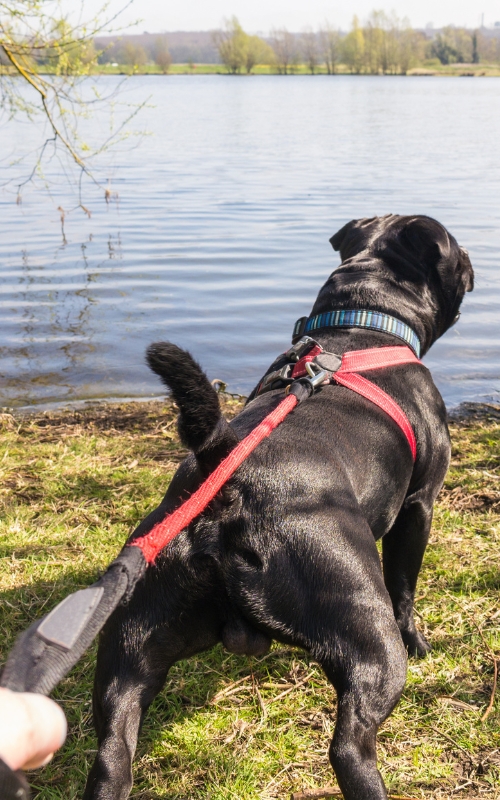
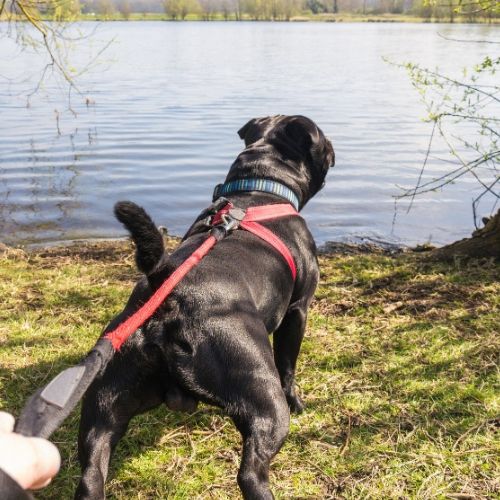
You got a dog to enrich your life. Not to get your shoulder dislocated on the way to the mailbox. Many owners in Charlotte reach the point where they dread walks, shorten them, or skip them altogether. That’s a problem for you. And it’s a bigger problem for the dog.
Why Your Dog Pulls and Why Pulling Back Makes It Worse
Most owners assume their dog pulls because it’s dominant, stubborn, or just not listening. The actual explanation is simpler: pulling works. The dog moves forward, the walk continues, and they reach the smell (or the dog or person) it wanted. A bad habit forms and the behavior gets reinforced.
Pulling back harder doesn’t fix it because dogs have a hardwired opposition reflex. When they feel resistance on the leash, they instinctively pull against it. Pavlov documented this over a century ago and called it the freedom reflex. Our goal isn’t to overpower your dog. It’s to change your dog’s focus and its understanding of what the leash means.
How We Train Your Dog to Stop Leash Pulling
Our trainers come to your home, assess what’s happening on the leash, and build a plan specific to your dog. We look at when the pulling happens, what triggers it, what the you’ve already tried, and what the environment looks like — because two dogs that both pull can be pulling for completely different reasons and need different approaches.
You’re also the one continuing this between sessions. We build the plan around that reality from day one.
Our Training Programs:
Our Leash Training Goal for Your Dog
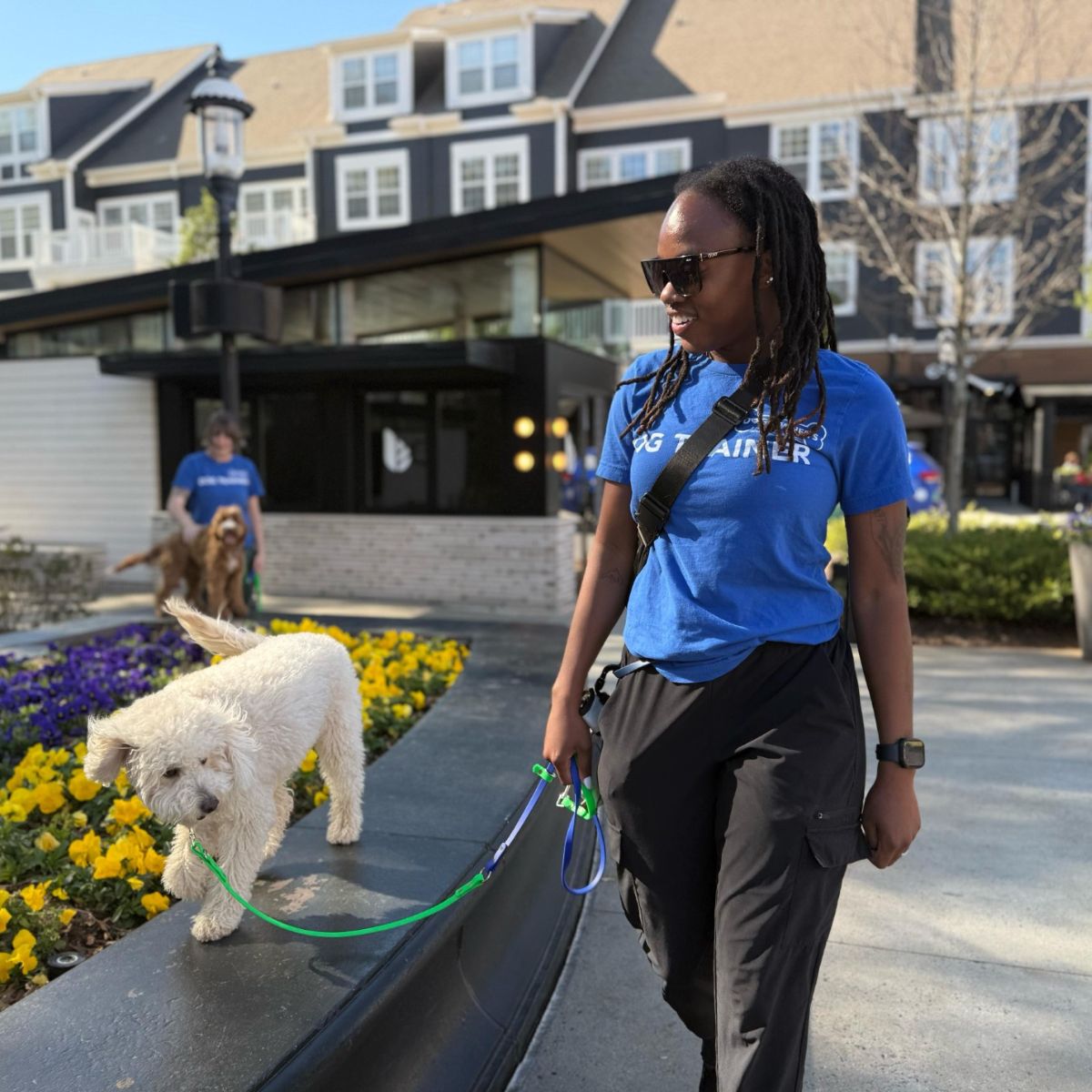
Leash training at Dog Owner’s Academy isn’t about getting your dog to walk perfectly in an empty parking lot while nothing interesting is happening. That’s not the standard we train for.
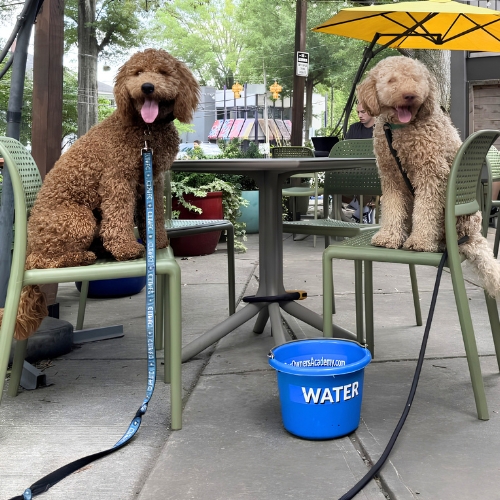
The standard is a dog that walks with you through your neighborhood in Matthews, down a crowded greenway in Huntersville, past the patio of a dog-friendly restaurant in NoDa — without turning every walk into a negotiation. A dog that only behaves when nothing distracting is present isn’t trained. It’s just waiting for the right trigger.
That’s what Train As You Live™ means. We train for your real life, in your real environment, with the real distractions your dog actually encounters. Not a controlled simulation of it.
If your dog also reacts to other dogs, people, or bikes while on leash, that’s a connected but separate problem we address as well. See our Leash Reactivity page for more on that.
Frequently Asked Questions
Why does my dog pull on the leash?
What are the safety issues of leash pulling?
There’s a real physical risk in how many dogs are walked that doesn’t come up often enough.
When a dog pulls continuously against a tight leash at the collar, it restricts both ventilation and blood circulation. The body’s ability to cool arterial blood before it reaches the brain is impaired. In hot Charlotte summers, walking the greenway in July, heading out to a brewery on a Saturday afternoon, a dog pulling hard isn’t just annoying. It’s a physiological stressor. This is compounded in short-nosed breeds like bulldogs and French bulldogs, but it applies across the board.
Leash pulling also creates real injury risk for owners. A dog that pulls hard can strain your shoulder or wrist over time, knock you off balance on a wet sidewalk, or drag you toward a street. These aren’t worst-case scenarios — we’ve seen all of them.
Fixing leash pulling isn’t just a quality-of-life upgrade. It’s a safety matter for both ends of the leash.
Can any dog learn to stop pulling?
Yes. Age and breed both affect how ingrained the habit is and how long it takes to change, but we haven’t met a dog that can’t improve with the right approach and consistent follow-through. Puppies that pull are easier to redirect early. Adult dogs with years of pulling history take more work, but they get there.
How long does it take?
Most dogs show meaningful improvement within the first few sessions. Often, clients will see results as early as the first lesson. The timeline depends on how long the behavior has been reinforced, the dog’s temperament, and how consistently the training is applied between sessions. We’ll give you an honest read at the free in-home consultation — not a sales pitch.
My dog only pulls toward certain things, like other dogs, squirrels, and bikes. Is that different?
It can be. A dog that pulls toward everything is often high-energy and understimulated. A dog pulling specifically toward other dogs or people may have leash reactivity that needs its own assessment. Mention what you’re seeing when you book. We come prepared to look at the full picture.
What should I do right now?
Charlotte Has Great Places to Walk and Hang Out With Your Dog. You Should Enjoy Them.
Dog Owner’s Academy has been helping families comfortably explore dog-friendly places in Charlotte since 2008. We come to you, assess what’s happening on the leash, and give you a real plan. That way, you can make great memories with your dog instead of dreading taking them out in public.
Real Owners. Real Dogs. Changes That Last.
See what’s possible when leash pulling gets the right training.
 Amanda Roberts
Google Review
Amanda Roberts
Google Review
By the end of the lesson, Lucy and I were able to walk together instead of Lucy dragging me down the street. It's only been a couple of days, but we can leave my street now and calmly walk through the neighborhood — even if another dog walks by! It's amazing to see such a dramatic improvement after just one session.
Suzanne Miller
Google Review
After the very first lesson of leash walking, I went from dreading anxiety-filled walks to enjoying being outside with my pup! With Amya’s and Dom’s coaching, we progressively introduced my dog and cats, crate trained, and worked on commands like “place” and walking “with me”. We are starting to venture out more to dog-friendly shops and are excited to begin group lessons, too!
Scott Rossmeisl
Google Review
Our Sadie is a completely different dog now. Will come when called, walk without pulling and is very responsive to commands. This is a 100% game changer!!!
Laura Bryan
Google Review
My new dog was having behavioral issues (food aggression, pulling), and now he is much improved. I also like that there are plenty of opportunities for socializing. Amya, Turk, and the team are so supportive. The investment is so valuable.
Casey Baker
Google Review
Our great dane puppy had finally realized she could leverage her size and strength to do whatever she wanted. We are still doing sessions, but even after the first training session, she was VERY well-mannered, and we could see huge improvements. Now she walks off leash, comes when called, listens when we want her to stay somewhere or not do something, and more.
Tired of Being Pulled Around by Your Dog?
Leash pulling doesn’t get better on its own, but with the right training, your dog can learn to be better behaved — and you can be the confident leader they need. Let’s go for a better walk.
Three easy steps. No commitment. Just expert guidance and a clear plan.
01
Use the online calendar below to book your free leash pulling consultation.
02
We come to your home to observe your dog, talk about your goals, and review pricing.
03