Stop Destructive Dog Chewing in Charlotte, NC (and Nearby)
One Chewed Shoe is an Accident. A Pattern Is a Problem.
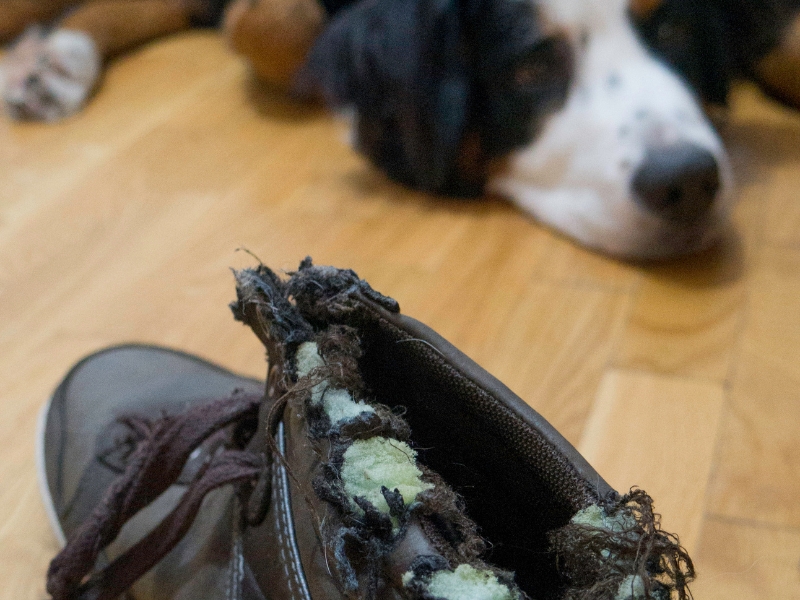
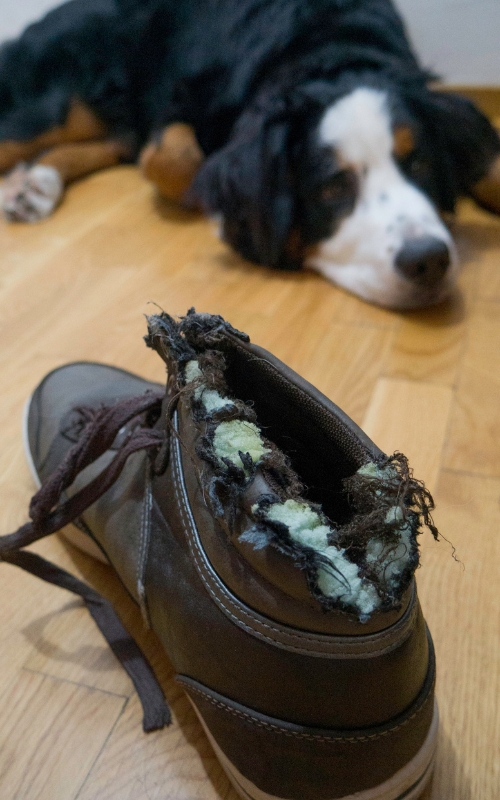
Chewing is normal dog behavior. Nobody expects a puppy to arrive fully restrained. But when you’re hiding your shoes, replacing furniture cushions for the third time, and bracing yourself every time you come home — that’s not normal anymore. That’s a pattern, and patterns have causes.
Dog Owner’s Academy has been working with Charlotte families on this exact issue since 2008. After 5,000+ dogs, we have a clear read on what’s driving it and what stops it for good.
What’s Driving the Chewing?
Chewing isn’t the problem. Misdirected chewing is. Dogs chew because they need to chew. It’s stimulating, it relieves stress, and it’s a normal part of how they explore the world. The issue is when that need gets directed at your furniture, baseboards, or doorframes instead of something appropriate.
The most common reason for chewing in adult dogs is separation distress. They aren’t acting out — they’re trying to cope with being alone and failing. Boredom and insufficient exercise are close behind: a dog that isn’t getting enough physical and mental outlets will find its own. Some dogs have simply learned that grabbing a forbidden item gets a reaction, and the chase that follows is entertaining enough to lock the habit in fast.
Pay Attention to Where and What They Chew
Where your dog chews is often the clearest clue — doorframes and window casings point toward separation issues (more on that on our Separation Anxiety page), while pillows and socks chewed while you’re home usually point elsewhere.
More chew toys won’t fix a dog chewing from anxiety. Identifying the real cause is what determines the right approach.
How We Get to the Root of It
Our trainers come to your home in Charlotte, Matthews, Huntersville, or wherever you are, and observe what’s actually happening — what’s being targeted, when it happens, and what’s going on in the environment. The fix depends entirely on the cause, so we don’t guess. And we don’t hand you a generic list of tips you’ve already tried.
We work with you and your dog together. You’re the one managing this between sessions and after training wraps up, so by the end of the consultation you’ll know exactly what’s driving the behavior and what to do about it.
Our Training Programs:
- Private In-Home Training
- Jumpstart: In-Home + Board and Train
- Autopilot: Full Board and Train
- Group Classes
The Real Cost of Waiting
Here’s something most owners don’t know: even after the original cause is resolved, the chewing itself can become the habit — independent of whatever started it. The longer it runs, the more entrenched it gets, and the harder it is to undo.
There’s also real risk involved. Dogs that chew electrical cords, swallow fabric, or get into toxic plants are headed toward a serious vet situation — and one intestinal blockage surgery can cost more than a full training program. We’ve seen it happen more than once.
Waiting isn’t neutral. Every week this continues, the habit gets a little more locked in, and the risk to your dog goes up with it.
Frequently Asked Questions
Why does my dog chew on things they shouldn’t?
Usually boredom, anxiety, attention-seeking, or a lack of clear boundaries. The timing and pattern tell you a lot — a dog chewing doorframes when left alone is a different problem than a dog shredding pillows while you’re home.
Is destructive dog chewing dangerous?
It can be. Electrical cords, toxic plants, small objects, and fabrics that cause blockages are real risks. Sudden or out-of-character chewing is also worth a visit to the vet before assuming it’s purely behavioral.
Can an older dog be retrained to stop chewing?
How long does it take?
What can I do right now?
Real Dogs. Real Owners. Changes That Last.
See what’s possible when dogs get the right training.
Amya, Dominic and Turk are all amazing with my puppy Suki and have helped elevate her obedience to a whole new level. They have helped me with how to set boundaries with her and having her follow through with her obedience even in a high distraction environment.
Wonderful experience and already on our way to reaching our goals. They don’t judge if sliding backwards in training and are always validating and encouraging while challenging us to improve! I couldn’t thank them enough!!!! The groups are invaluable to progress.
We are just at the beginning of the training process and have started seeing great results with our little Bruno. Amya is on point, professional, and very knowledgeable about all things related to dogs, not just training. Very impressed!