You’ve probably tried it. Your dog lunges forward, you yank back, and they pull even harder. Next, you hold your ground like a post and wait for the dog to stop, but they don’t stop. Eventually you just start walking again because standing on a sidewalk in Huntersville for four minutes while your dog strains toward a squirrel is not how you planned to spend your morning.
Here’s the thing: you weren’t doing it wrong. You were doing exactly what most people do. The problem is that it doesn’t work — and there’s a specific biological reason why.
The Opposition Reflex: Why Pulling Back Makes Things Worse
When a dog feels resistance on a leash, it pushes against it. Not because it’s stubborn. Not because it’s trying to dominate you. Because it’s a hardwired reflex.
Pavlov documented this over a century ago and called it the freedom reflex — the instinctive drive to oppose physical restraint. When confronted with forces that impede their freedom of movement, dogs reflexively respond with oppositional behavior to counter those forces. The harder you hold back, the more the dog pulls forward. If you pull the dog toward you, it pulls back. The reflex works in both directions.
What makes this worse is what happens next. The motivational effect of opposition is frustration. And the typical behavioral response to frustration is more pulling — with more intensity. So the owner holds firmer, the dog pulls harder, both get more frustrated, and the walk deteriorates from there.
At Dog Owner’s Academy, this is one of the first things we explain to owners who come to us after months of failed attempts. They’ve been working against a reflex. The goal was never to overpower the dog. The goal is to change what the dog is focused on and what it understands the leash to mean.
The “Stand Like a Post” Method (And Why It Usually Fails)
You’ve probably read about it. The idea is simple: the moment your dog pulls, you stop moving completely. You become immovable. The dog eventually stops pulling, the leash goes slack, and then you walk forward. Theoretically, the dog learns that pulling gets it nowhere.
In theory, it’s sound. In practice, it breaks down fast.
The consistency required is significant. Every person who walks the dog has to apply it the same way, every single time. One family member who lets the dog pull (even occasionally) resets the pattern. Intermittent reinforcement, where a behavior is rewarded some of the time but not others, actually makes habits more resistant to change, not less. The dog that gets to pull sometimes will pull harder and more persistently than the dog that always gets to pull.
Most owners also underestimate how long and how many repetitions this method takes before the dog generalizes it. A dog that stops pulling in a quiet parking lot with no distractions is not a dog that will stop pulling on a busy greenway trail. Context matters enormously to dogs, and compliance in one environment doesn’t automatically transfer to another.
This isn’t a knock on the method — it’s a realistic look at why it stalls for most households without professional guidance.
The Walk Starts Before You Leave the House
Here’s something most people don’t consider: by the time the front door opens, a pulling dog is already primed to pull.
The moment most dogs see the leash come out, their arousal shoots up. The leash isn’t just an object — it’s a signal that has been repeatedly paired with the excitement of going outside. It becomes a trigger. Behaviorally, this is called an establishing operation — a condition that increases the motivational value of a reward and intensifies behavior aimed at getting it. The dog isn’t just excited. It’s been neurologically primed to pull and get where it wants to go.
What this means practically is that the work begins at the door, not on the sidewalk.
One of the things we teach at Dog Owner’s Academy is a simple door ritual that addresses this directly. The leash doesn’t go on until the dog is calm. You don’t open the door until the dog backs away from it and waits. The dog is released to exit only on a signal, not whenever it decides the moment is right. It sounds like a small thing. It isn’t. Teaching a dog to wait and back away from the door before a walk begins significantly reduces preparatory arousal, and a calmer dog at the threshold means a calmer dog on the leash.
There’s a Safety Angle Here That Doesn’t Get Talked About Enough
Most people think of leash pulling as a nuisance. It’s more than that.
When a dog pulls hard and continuously against a collar, it restricts both ventilation and blood circulation through the neck. The body’s ability to cool arterial blood before it enters the brain is compromised. In Charlotte summers — July walks on the greenway, a Saturday afternoon on the patio trail — a dog working against a tight collar isn’t just uncomfortable. It’s under real physiological stress. This is particularly true for short-nosed breeds like bulldogs and French bulldogs, but it applies broadly.
For the owner, the risks are more immediate: wrist and shoulder strain over time, being thrown off balance on a wet sidewalk, and being dragged toward traffic when the dog spots something. These aren’t hypotheticals. We’ve seen all of them.
Addressing leash pulling isn’t a lifestyle upgrade. For a lot of dogs and owners, it’s a genuine safety issue.
What Actually Works: Redirecting Focus, Not Overpowering Force
The common thread in effective leash training isn’t strength — it’s attention.
Dogs that pull excessively are often highly attracted to environmental stimuli. They’re stimulation-seekers. These dogs aren’t bad. They’re dogs whose attention is entirely on the environment and almost entirely off the person holding the leash. Training for loose-leash walking is, at its core, attention training.
A few things that actually make a difference:
Burn energy before the walk, not during it.
A vigorous play session — ball play, tug, whatever your dog loves — before heading out reduces the pent-up energy that fuels pulling. Moving from play to a long line to a short leash makes the transition to controlled walking significantly easier for most dogs. Trying to walk a dog that has been inside all day and is bursting at the seams is always going to be harder than it needs to be.
The leash is a communication tool, not a tether.
A dog that understands what the leash means — that movement follows cooperation, not the other way around — behaves completely differently from a dog that treats the leash as an obstacle to overcome. Getting there requires teaching the dog to follow leash guidance rather than oppose it. That’s a trained skill, not a personality trait.
Real-world training beats controlled-setting training every time.
A dog that walks perfectly in a quiet parking lot is not a trained dog. It’s a dog that hasn’t encountered anything interesting yet. The standard worth training for is a dog that walks calmly past other dogs, cyclists, kids on scooters, and the neighbor’s cat — in the actual environments where your life happens. In Belmont, in Fort Mill, on a crowded Saturday morning trail in Charlotte. That’s the bar.
At Dog Owner’s Academy, we train in your real environment from the first session. Your streets, your neighborhood, your dog’s actual triggers. The reliability has to be real-world because that’s where you live.
The Leash Pulling and Reactivity Connection
A quick note for owners whose dogs don’t just pull, but pull specifically toward other dogs, people, or moving objects with intensity that goes beyond curiosity.
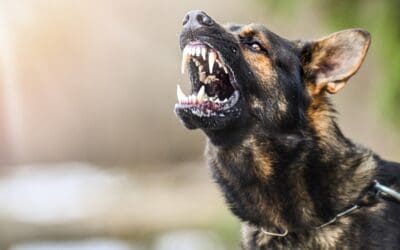
Leash pulling and leash reactivity are related but distinct problems. A dog that pulls toward everything is often under-stimulated and high-drive. A dog that pulls with explosive intensity toward specific triggers — lunging, barking, losing its mind at the sight of another dog — may have a reactivity component that requires its own assessment and approach. If that sounds familiar, it’s worth mentioning when you book. They can be addressed together, but conflating them leads to incomplete training plans.
You can also read about Herbie’s transformation, a leash-reactive dog whose owner came to us after months of dread on every walk. The progress was real, and it happened faster than the owner expected.
The Walk You Actually Wanted
When you got your dog, you probably pictured walks that looked a certain way. Relaxed. Enjoyable. Something you both looked forward to. Not a daily workout in frustration management.
That’s still available. It’s not about having a different dog — it’s about the dog understanding something it was never clearly taught. Most dogs that pull have simply never had anyone interrupt the pattern and show them what else is possible.
If walks in Charlotte have become something you dread, or something your dog isn’t getting enough of because they’re too hard to manage, that’s worth addressing. The improvement tends to be faster than people expect — and the difference in daily life is immediate.
We come to you, train in your real environment, and give you a clear plan from the first session. Book a free in-home consultation and let’s take a look at what’s actually happening on that leash.