
What to Ask at a Free Dog Training Evaluation (And How to Compare Answers)
- Marketing Team
- January 08, 2026
- Blog
You’re here because you love your dog, but you’re at your wit’s end. Maybe it’s the barking that has the neighbors giving you the side-eye. Or the leash-pulling that’s turned your relaxing walks into a wrestling match. Maybe it’s something more serious. Whatever it is, you’ve made the smart decision to seek professional help. And now you’re staring at a list of trainers offering a “free evaluation.”
It sounds great, right? A no-risk way to find the perfect solution.
But here’s the truth: a free evaluation isn’t just a friendly chat. It’s a sales meeting. And in a dog training industry that’s projected to be worth over $820 million in the U.S. alone, the stakes are high. The problem is, this industry is completely unregulated. Anyone, and I mean anyone, can print business cards and call themselves a dog trainer.
That’s why this consultation is your single most important tool for vetting a potential partner. You’re not just buying a service; you’re entrusting your dog’s well-being and your family’s peace of mind to someone’s expertise. Your mission is to cut through the sales pitch and find a true professional.
This guide is your playbook. We’re going to give you the high-leverage questions to ask, a framework to compare the answers, and the confidence to choose the right trainer for you and your dog
Table of Contents
- Before the Call: How to Prepare for a Productive Evaluation
- The High-Leverage Questions: Your Toolkit for Finding the Right Trainer
- Part 1: Expertise, Ethics, and Philosophy
- Part 2: The In-Person Assessment & Your Dog’s Experience
- Part 3: Owner Involvement & Long-Term Success
- The Comparison Method: How to Score Answers and Trust Your Gut
- Creating Your Trainer Comparison Scorecard
- Reading Between the Lines: Beyond the Scripted Answers
- Key Takeaways: Your Quick Reference Guide
- Frequently Asked Questions
- Ready to Find a True Partner in Your Dog’s Training?
Before the Call: How to Prepare for a Productive Evaluation
Before you even pick up the phone, take 15 minutes to get your own story straight. A great trainer will be evaluating you just as much as you’re evaluating them. They need to know if you’re a good fit for their program. Being prepared shows you’re serious and helps them give you a more accurate assessment.
Have these details ready:
- Your Dog’s Bio: Age, breed, health history, and where you got them (breeder, rescue, etc.).
- The “Problem” List: Be specific. Not “he’s aggressive,” but “he lunges and barks at other dogs on walks when they come within 10 feet.” Not “she has anxiety,” but “she destroys pillows and barks nonstop when left alone.”
- Your Goals: What does success look like? Think about it this way: what’s the one thing you wish you could do with your dog that you can’t do now? Is it having guests over without him jumping all over them? Or trusting him off-leash at the park? Paint a clear picture.
- What You’ve Tried: Be honest about past training attempts, whether it was another professional or just things you saw on YouTube. It’s all relevant data.
Having this information organized allows the trainer to spend less time on basic intake and more time discussing their actual solution.

The High-Leverage Questions: Your Toolkit for Finding the Right Trainer
Okay, this is the core of your mission. These aren’t just random questions. They are specifically designed to reveal a trainer’s philosophy, ethics, and effectiveness. For each question, we’ll cover what a great answer sounds like and what should set off alarm bells.
Part 1: Expertise, Ethics, and Philosophy
These first questions are about their professional foundation. They separate the career professionals from the hobbyists.
- “What are your certifications, and what ongoing education do you pursue?”
- Why it Matters: The unregulated nature of this industry makes independent certification crucial. It’s proof of a baseline knowledge and commitment to the profession.
- What a Great Answer Looks Like: They should confidently name specific, respected certifications. Look for credentials like CPDT-KA or CBCC-KA from the Certification Council for Professional Dog Trainers (CCPDT), or others from reputable organizations. They should also get excited talking about recent seminars, workshops, or books they’ve read. Lifelong learning is a hallmark of a true expert.
- Red Flags: Vague answers like “I have years of experience” or “I’ve just always had a way with dogs.” Experience is valuable, but it’s not a substitute for formal education in animal behavior science. Dismissing certifications as “just pieces of paper” is a major red flag.
- “What happens when my dog gets something right? And what happens when they get it wrong?”
- Why it Matters: This is the most important question you can ask. It cuts straight to the heart of their training methodology and reveals their entire philosophy in a single stroke.
- What a Great Answer Looks Like: For “getting it right,” you want to hear words like rewards, praise, affection, play, or treats. They should focus on reinforcing the behavior you want to see. For “getting it wrong,” a good trainer will talk about managing the environment to prevent the mistake, redirecting the dog to a correct behavior, or withholding a reward (negative punishment). They focus on teaching the dog what to do instead.
- Red Flags: Listen for words like “correction,” “dominate,” “alpha,” “pack leader,” or any mention of physical force. If they talk about using tools like prong collars, shock collars (often called “e-collars” or “stim collars”), or choke chains to stop a behavior, you are talking to someone using aversive, punishment-based methods. This approach can create anxiety, fear, and even aggression.
- “Do you offer any guarantees?”
- Why it Matters: This is a simple yes-or-no question with a definitive right answer.
- What a Great Answer Looks Like: “No, and any trainer who does is being dishonest.” A confident, ethical professional knows they are working with a living being with its own mind, personality, and emotions. They can guarantee their effort, their process, and their support, but they cannot and should not ever guarantee a specific outcome.
- Red Flags: “Yes, we guarantee your dog will be 100% trained!” Run. This is the clearest sign of a trainer who prioritizes sales over the ethical treatment and realistic training of animals. Top veterinary bodies like the American Animal Hospital Association explicitly warn against trainers who make these claims.
Part 2: The In-Person Assessment & Your Dog’s Experience
This is about how they’ll apply their philosophy to your dog. It’s where theory meets practice.
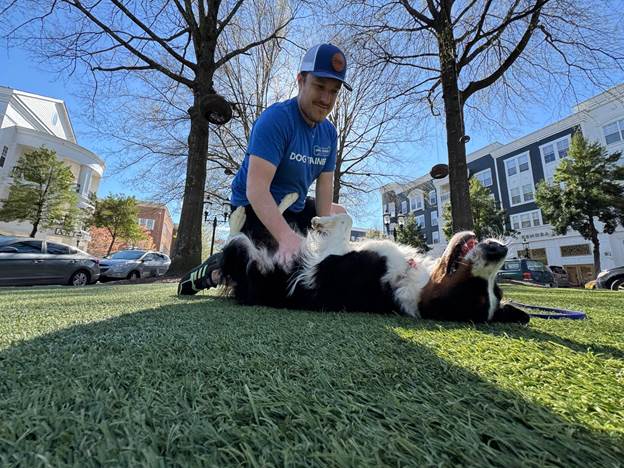
- “How much will you interact with my dog during this evaluation?”
- Why it Matters: You need to see how they engage with animals. Talk is cheap. Their ability to build rapport, read body language, and handle a dog speaks volumes.
- What a Great Answer Looks Like: “I’ll start by mostly observing how your dog acts in their own environment. Then, with your permission, I’ll do some light handling and maybe a few simple exercises to see how they respond.” They should prioritize making the dog feel comfortable, not rushing in to “show you what they can do.”
- Red Flags: A trainer who completely ignores the dog and only talks to you. Or, conversely, a trainer who immediately grabs the leash and starts trying to force the dog into a “heel” or a “sit” without building any trust first. This shows a lack of respect for the animal.
- “How do you assess my dog’s individual personality and learning style?”
- Why it Matters: Every dog is different. A one-size-fits-all approach is a recipe for failure. This question shows you value your dog’s unique character and want a trainer who does, too.
- What a Great Answer Looks Like: They should talk about observing your dog’s confidence levels, what motivates them (are they food-driven, toy-driven, praise-driven?), and their stress signals (lip licking, yawning, whale eye). They should sound like a detective, gathering clues to build a customized plan.
- Red Flags: Generic answers based on breed stereotypes (“Oh, he’s a Shepherd, they just need a firm hand.”). Any trainer who doesn’t seem interested in the nuances of your specific dog is selling a cookie-cutter program, not personalized training.
- “What specific tools and equipment do you recommend, and why?”
- Why it Matters: The tools a trainer uses are a direct extension of their philosophy. This question often exposes what their methodology looks like in practice.
- What a Great Answer Looks Like: They should recommend humane equipment like flat collars, harnesses (especially front-clip for pullers), and standard 6-foot leashes. They should be able to clearly explain the pros and cons of each and why they’re choosing a specific tool for your dog’s situation.
- Red Flags: An immediate jump to recommending aversive tools like prong, choke, or shock collars as the first and only solution. A good trainer has a whole toolbox; a poor one has a hammer and sees every problem as a nail.
Part 3: Owner Involvement & Long-Term Success
This is the most overlooked—and most critical—part of the evaluation. The training program isn’t the product. A trained owner is the product
- “What is my role in this process? How much of the training is me versus you?”
- Why it Matters: A trainer who works with your dog in a vacuum and then just “hands you the keys” is setting you up for failure. Real, lasting change happens when you learn how to communicate with and guide your dog.
- What a Great Answer Looks Like: “My primary job is to teach you. I’m a coach. We’ll have dedicated owner lessons where I transfer the skills to you, and I’ll give you clear ‘homework’ to practice between our sessions. Your involvement is the single biggest factor in your dog’s success.”
- Red Flags: “Don’t worry, you don’t have to do anything. Just send your dog to our board-and-train program, and we’ll fix him.” While board-and-trains have their place, a lack of emphasis on owner education is a huge problem. The behaviors will likely break down as soon as the dog comes home if you don’t know how to maintain them.
- “What kind of follow-up and support do you offer after the program ends?”
- Why it Matters: Training isn’t a one-and-done event. You will hit plateaus. New behaviors might pop up. You need to know if the trainer will be there for you when real life happens.
- What a Great Answer Looks Like: They should have a clear system. “We offer follow-up sessions at a reduced rate,” “You’ll have email and phone support for 6 months,” or “We have group classes for graduates to practice their skills.” They should see the relationship as a long-term partnership.
- Red Flags: Vague or non-committal answers. “Just give us a call if you have problems.” If their support system isn’t clearly defined, it probably doesn’t exist.
- “How do you measure progress, and how do you adjust the plan if we’re not seeing results?”
- Why it Matters: This is about accountability. You need a trainer who uses objective measures of success and has a plan B if things aren’t working.
- What a Great Answer Looks Like: “We’ll start by defining your goals, and we’ll track progress against those specific benchmarks. If we hit a wall, we’ll reassess. Maybe we need to change our reward system, break the behavior down into smaller steps, or look for an underlying environmental stressor. We adjust the plan based on the dog in front of us.”
- Red Flags: Blaming the dog or the owner. “He’s just a stubborn dog,” or “You must not be doing the homework.” A professional takes responsibility for the training plan and is adaptable enough to change course when needed.
The Comparison Method: How to Score Answers and Trust Your Gut
Okay, you’ve interviewed two or three trainers. Your head is swimming with information. How do you make an objective decision and avoid getting swayed by a slick salesperson? You use a scorecard.
Creating Your Trainer Comparison Scorecard
Don’t just rely on memory. Create a simple chart. Down the left side, list the key criteria. Across the top, list the trainers you’re considering.
Your criteria should be:
- Ethics & Methodology: (Score 1-5) Did they advocate for positive, science-based methods? Any red flags?
- Credentials & Expertise: (Score 1-5) Do they have respected certifications and a commitment to ongoing education?
- Customization: (Score 1-5) Did they seem interested in your specific dog’s personality or just offer a generic program?
- Owner Empowerment: (Score 1-5) How strong was their emphasis on teaching you and providing owner lessons?
- Long-Term Support: (Score 1-5) Do they have a clear, reliable follow-up plan?
- Professionalism & Rapport: (Score 1-5) Were they clear, confident, and did you feel comfortable with them?
After each call, immediately score the trainer while the conversation is fresh. Tally the scores. This simple act forces you to move from a vague “feeling” to a structured, data-driven comparison.
Reading Between the Lines: Beyond the Scripted Answers
The scorecard gives you the “what,” but you also need to consider the “how.”
- Did they listen? Or did they interrupt you to launch into their sales pitch? A good trainer is a diagnostic expert, and that starts with listening.
- Did they ask you questions? A great consultant asks more than they tell. They should be curious about your life, your schedule, and your relationship with your dog.
- How did they talk about other trainers? Professionals don’t trash their competition. They are confident in their own methods without needing to tear others down.
- Trust your gut. After you’ve done the logical analysis with the scorecard, check in with your intuition. Do you trust this person? Would you feel comfortable having them in your home, working with your beloved dog? Sometimes, that gut feeling is the most important data point of all.
Key Takeaways: Your Quick Reference Guide
- Why Ask These Questions? To cut through sales pitches in an unregulated industry and find a qualified, ethical professional who is the right fit for your dog and your family.
- What is the #1 Red Flag? A trainer who offers a 100% guarantee on behavior. This is a sign of a salesperson, not a professional. The second biggest red flag is any mention of dominance, alpha theory, or using force and fear (prongs, shock collars) as a primary method.
- What Should You Look For? Look for trainers with respected certifications (like CPDT-KA), a focus on positive reinforcement, and a strong emphasis on teaching you, the owner.
How Do You Compare Trainers? Use a simple scorecard to rate each trainer on key criteria like Ethics, Expertise, Customization, Owner Empowerment, and Long-Term Support. This creates an objective comparison.
Frequently Asked Questions
What if a trainer has years of experience but no certifications?
Experience is incredibly valuable, but it’s not the whole picture. Without certification, you have no third-party validation of their knowledge of learning theory, ethics, or modern behavioral science. A great trainer has both. Be cautious with those who rely on experience alone.
Is in-home training better than sending my dog to a facility?
For most common behavior problems, in-home training is superior. Training the dog in the environment where the problems actually happen is far more effective. It also allows the trainer to focus heavily on teaching you and your family how to implement the training in your daily life, which is the key to lasting results.
How much should dog training cost?
Prices vary widely based on your location, the trainer’s experience, and the program’s length. Instead of focusing on the lowest price, focus on the best value. A cheap program that doesn’t work is a waste of money and can even make problems worse. An effective, comprehensive program is an investment in years of peace and enjoyment with your dog.
Ready to Find a True Partner in Your Dog’s Training?
Choosing a dog trainer is a big decision, but it doesn’t have to be overwhelming. Now you have the tools to walk into any evaluation with confidence, knowing exactly what to look for and how to identify the best possible partner for your journey.
You’re looking for someone who respects your dog’s personality, understands the science of how they learn, and believes in empowering you to be the best dog owner you can be.
At Dog Owner’s Academy, that philosophy is at the core of everything we do. For over 17 years, we’ve partnered with more than 4,000 families in the Charlotte area, creating customized, in-home training plans that deliver real results without crushing a dog’s spirit.
If you’re ready to see that approach in action, we invite you to schedule your free, no-obligation in-home demo. We’ll come to you, meet your dog, and show you exactly how we can help you achieve your goals.